 Our Offices
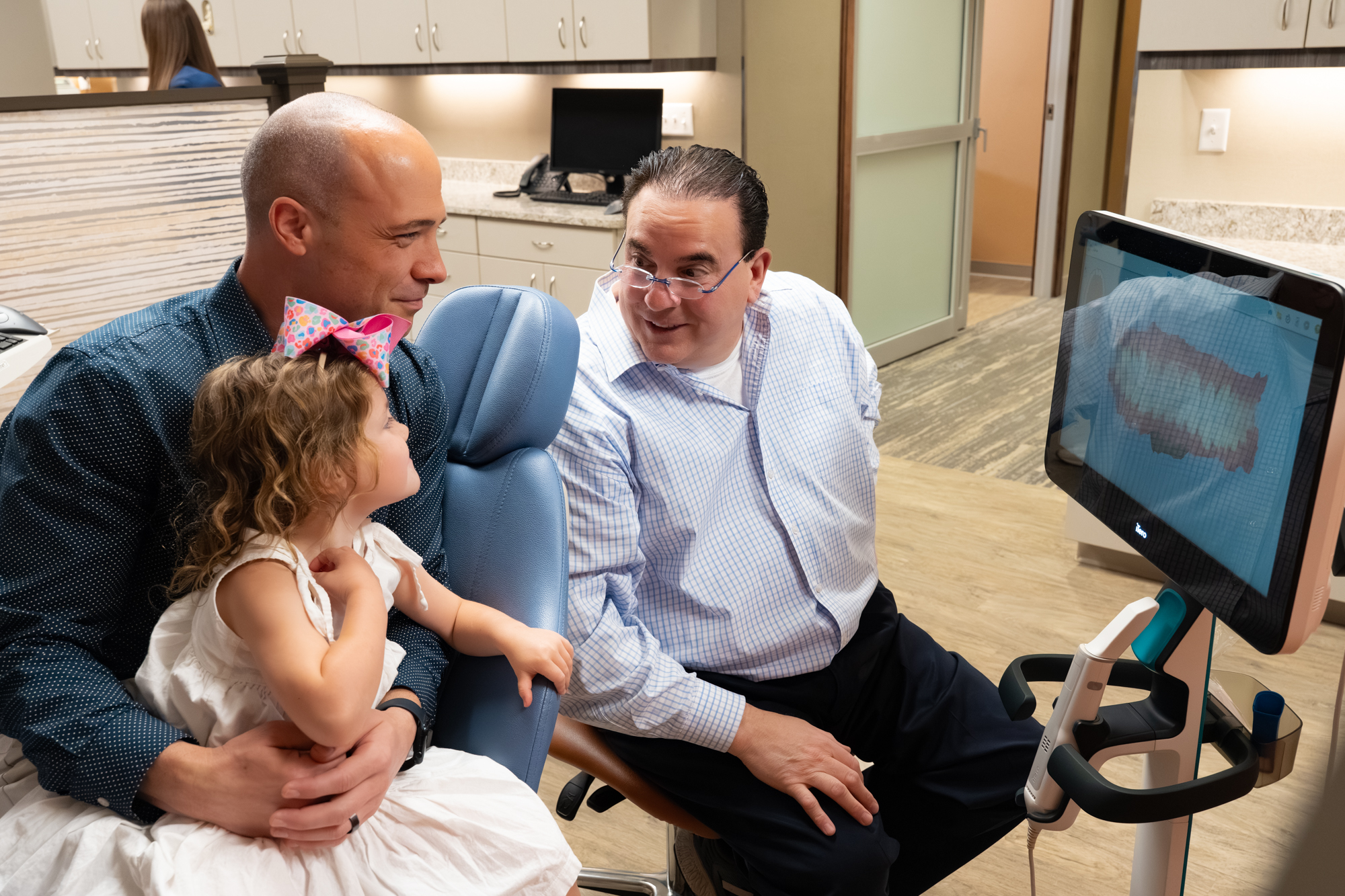
Many parents are surprised to learn that orthodontic care can start well before the teenage years. The American Association of Orthodontists recommends that every child have a first orthodontic check-up by age 7. That does not mean braces at seven. It means giving us an early look so we can catch small issues while they are still easy to guide.
Why age 7
Around age seven, children have a mix of baby and permanent teeth, and the jaw is still actively growing. That combination is our best early window. We can see how the adult teeth are erupting, how the bite is coming together, and whether the jaw has enough room for the teeth still on the way. Growth is a powerful tool, and catching a concern while a child is still growing lets us work with it rather than against it.
What we look for
A first visit is relaxed and completely pressure-free. During an evaluation of your child’s smile, we check for things like:
- Crowding or spacing that hints the jaw may run short on room.
- Crossbites, where upper and lower teeth do not meet correctly.
- Protruding front teeth, which are more prone to injury.
- Baby teeth lost too early or too late, which can disrupt how adult teeth come in.
- Habits like thumb sucking that can shape a growing bite.
Our orthodontic care for children is built around this kind of early, watchful evaluation. If you would like a primer on the bite issues we screen for, our guide to overbites, underbites, and crossbites explains each one.
Early treatment is often about timing, not braces
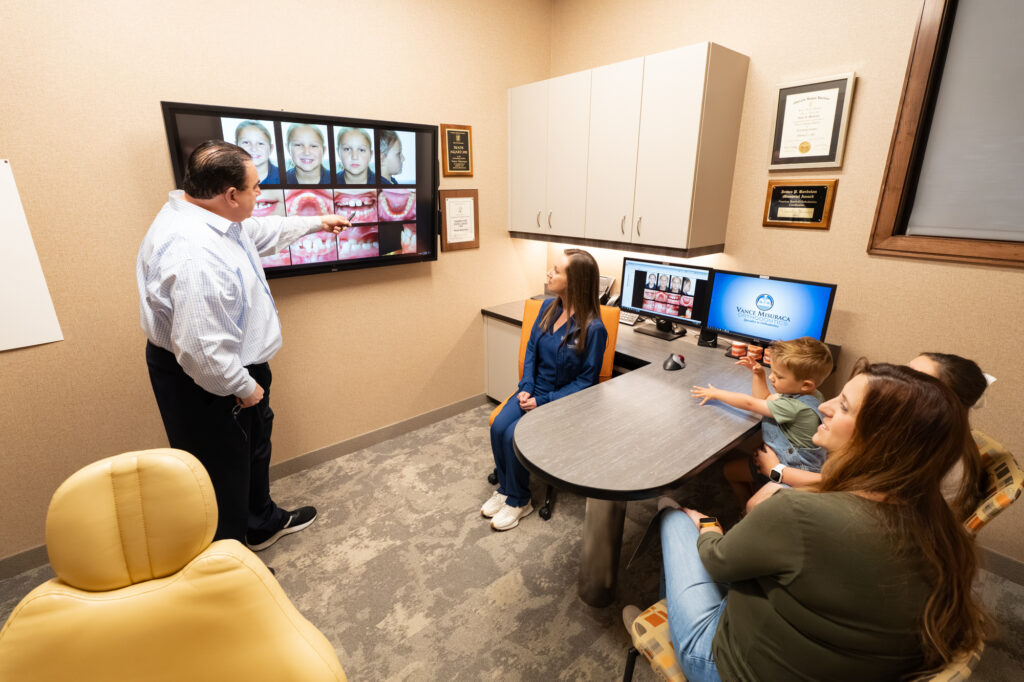
For most seven-year-olds, the recommendation is simply to keep watching as they grow. When early treatment is warranted, it usually addresses jaw development rather than straightening teeth. A palatal expander, for example, can widen a narrow upper jaw while it is still growing, creating room for teeth and correcting a crossbite. Guiding growth at the right moment can reduce the need for extractions later and make any future braces phase shorter and simpler.
If your child is older than 7
Do not worry if you are reading this and your child is already older. Age 7 is a guideline for the first check, not a cutoff for treatment. An evaluation is valuable at any age, and wonderful results begin in the teen years and adulthood all the time. The key is simply not to sit on a concern you have already noticed.
Dr. Vance Misuraca has guided many local families through these early decisions with a conservative, honest approach, recommending treatment only when it genuinely helps. You can learn more about Dr. Misuraca, and when you are ready, schedule a free consultation at our Central, Denham Springs, or Prairieville office.
Frequently Asked Questions
At what age should my child first see an orthodontist?
The American Association of Orthodontists recommends a first check-up by age 7, when a child has a mix of baby and permanent teeth and the jaw is still growing.
Does an early visit mean my child will get braces right away?
Usually not. For most children the first visit is an evaluation and we simply monitor growth. Treatment only begins when there is a clear reason, and early care often focuses on guiding jaw development.
What problems can early treatment prevent?
Guiding growth at the right time can correct crossbites, create room for crowded teeth, reduce the need for extractions, and make a later braces phase shorter and simpler.
Is it too late if my child is already 10 or older?
Not at all. Age 7 is a guideline for the first check, not a deadline. An evaluation is worthwhile at any age, and excellent outcomes start in the teen years and adulthood every day.