 Our Offices
Baton Rouge Orthodontist: What to Know Before You Start Treatment
If you're searching for a Baton Rouge orthodontist, choosing the right one comes down to three things: specialist credentials, the technology used in the office, and an appointment schedule that actually fits your family. Start with a free consult, ask directly about board certification, and compare treatment plans side by side before you decide.
At Misuraca Orthodontics, Dr. Vance Misuraca is a board-certified orthodontist serving Baton Rouge, Prairieville, Denham Springs, and Central from three convenient offices. He completed his LSU Orthodontic Specialization and holds membership in both the American Association of Orthodontists and the Southern Association of Orthodontists. That credential cluster is the kind of thing worth confirming anywhere you go.
What Is an Orthodontist?
An orthodontist is a dental specialist who diagnoses and corrects tooth and jaw alignment. When you're comparing an orthodontist to a general dentist, the difference comes down to training: orthodontists finish dental school, then complete two to three additional years of residency focused only on moving teeth and guiding jaw growth.
That extra training matters because alignment problems are rarely just cosmetic. A specialist looks at how your teeth fit together, how your jaws grow, and how your bite functions when you chew and speak.
Conditions an orthodontist regularly treats include:
- Crowding, when there isn't enough room for teeth to line up
- Spacing or gaps between teeth
- Overbite, when upper front teeth extend too far past the lower ones
- Underbite, when lower teeth sit ahead of the uppers
- Crossbite, where upper and lower teeth meet in the wrong position
- Open bite, when teeth don't touch when the back teeth close
One distinction matters here. Plenty of general dentists offer clear aligners, and some cases go well. But a dentist has not completed orthodontic residency, so complex bite and growth problems can be missed or under-treated. A board-certified orthodontist has passed voluntary examinations from the American Board of Orthodontics on top of that residency, which is the highest credential in the specialty.
How Orthodontic Treatment Works, Step by Step
Orthodontic treatment follows a predictable sequence: exam, diagnostic records, treatment plan, appliance placement, regular adjustment visits, and retainers. Most Baton Rouge-area patients move from that first free consult to bonded braces or a first aligner set within a few weeks. At Misuraca Orthodontics, same-day starts mean some smiles begin that same visit.
Here's how it usually goes:
- Free consult and visual exam. Dr. Vance Misuraca looks at your teeth, bite, and jaw alignment, listens to what bothers you, and explains what he sees in plain language.
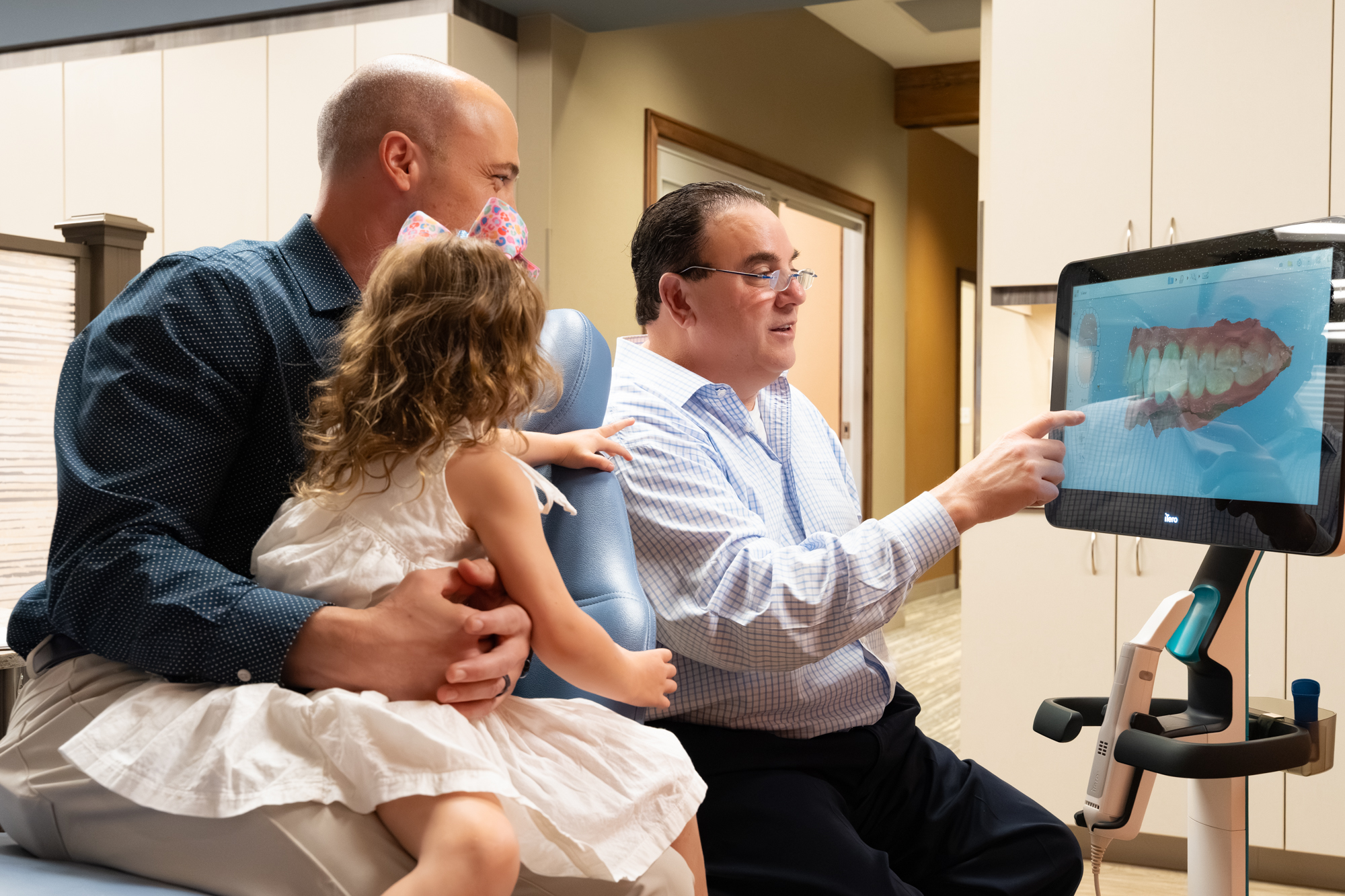
- Digital records. Digital photos, digital X-rays, and a digital scanner capture your teeth in three dimensions. No goopy impressions required.
- Custom treatment plan. You'll get a clear recommendation and an estimated timeline before anything begins. Questions are welcome at this stage, and honestly, this is where most people ask the best ones.
- Appliance placement. Braces are bonded to your teeth in a single appointment, or your first set of aligners is delivered with wear instructions.
- Progress visits. Plan on an adjustment or aligner check every four to eight weeks so we can confirm teeth are tracking the way they should.
- Retainer phase. Once teeth reach their final positions, a retainer holds them there. This step protects everything you just accomplished.
Each visit builds on the last one. If teeth aren't moving as expected, in-person checks let us adjust the plan mid-course instead of waiting until the end.
What Are the Benefits of Seeing an Orthodontic Specialist?
Straight teeth are the visible payoff, but the health benefits run deeper. Specialist-level diagnosis catches jaw and growth issues that a cosmetic-only plan can overlook, and that difference shows up years down the road.
What patients gain from specialist care:
- Accurate diagnosis. Growth patterns, airway concerns, and bite discrepancies get evaluated, not just tooth position.
- Easier daily cleaning. Aligned teeth are simpler to brush and floss, which lowers the risk of decay and gum inflammation.
- Better bite function. Even contact between upper and lower teeth reduces uneven wear, chewing strain, and jaw discomfort.
- Speech and breathing support. In some airway-related cases, correcting jaw position and arch width helps with breathing and speech clarity.
- Real confidence. Many patients tell us that a corrected smile leaves them feeling more comfortable in photos, interviews, and everyday conversations.
- Hands-on monitoring. Mail-order aligner kits can't feel a tooth that's binding or spot a root moving the wrong direction. Regular in-office checks can.
That last one matters more than people expect. Orthodontics is a series of small, controlled corrections, and someone with specialty training needs to be watching them happen.
Braces vs. Clear Aligners: How the Options Compare
Most treatment plans come down to three choices: metal braces, clear ceramic braces, or clear aligners. All three move teeth effectively. The right fit depends on how complex your case is, how visible you want treatment to be, and how consistent you can be with wear time.
| Option | Visibility | Removable | Typical Duration | Best-Fit Cases |
|---|---|---|---|---|
| Metal braces | Most noticeable | No, fixed in place | Around 12-24 months | Widest range of movements, including complex bite and rotation corrections |
| Clear (ceramic) braces | Blends with enamel | No, fixed in place | Similar to metal braces | Adults and teens who want fixed braces with a subtler look |
| Clear aligners | Nearly invisible | Yes, removable | Around 12-18 months for many cases | Mild to moderate crowding and spacing, with strong wear compliance |
A few practical notes as you compare:
Metal braces handle the toughest movements. Brackets and wires apply steady, controlled pressure that stays in place, which makes them dependable for significant corrections.
Clear braces work exactly like metal braces using tooth-colored or nearly transparent materials. You keep the strength and predictability of fixed braces with a look that blends into your smile.
Clear aligners need 20 to 22 hours of daily wear to work. Trays sitting in a backpack don't move teeth, so compliance often becomes the deciding factor for teen cases. Dr. Misuraca will talk through that honestly with your family rather than guessing.
And no matter which option you pick, treatment finishes with a retainer. That phase isn't optional if you want your smile transformations to last.
Who Is a Good Candidate for Treatment?
Almost anyone with healthy teeth and gums is a candidate. The American Association of Orthodontists recommends that every child have a first orthodontic evaluation by age seven, when enough permanent teeth have come in to reveal developing problems. Dr. Misuraca agrees with that guidance, and an early visit doesn't automatically mean early treatment.
Children. Around age seven, we can spot crossbites, crowding, and jaw growth concerns while there's still room to guide development. Early treatment can create space for incoming teeth and reduce how complex later treatment needs to be.
Teens. These years remain the most common window. Most permanent teeth have erupted and the jaws are still growing, which is an ideal setup for positive change.
Adults. There's no upper age limit for orthodontic treatment. As long as your gums and supporting bone are healthy, teeth can be moved at any age.
Signs it's time for an evaluation:
- Crowded or overlapping teeth
- Noticeable gaps
- A jaw that shifts or clicks when you close
- Trouble chewing or biting cleanly
- A history of thumb-sucking or prolonged pacifier use
- Teeth that wear unevenly
One caveat: active gum disease or untreated decay needs to be addressed before appliances go on. We'll coordinate with your general dentist so nothing gets skipped.
Why Baton Rouge Families Choose Misuraca Orthodontics
Credentials are the first thing to check when you're comparing offices. Dr. Vance Misuraca is a board-certified orthodontist who completed his LSU Orthodontic Specialization, and he holds membership in both the American Association of Orthodontists and the Southern Association of Orthodontists.
He's also a lifelong Louisiana resident with over 30 years of experience treating families of every age, and ongoing continuing education keeps his training current as techniques, brackets, and aligner systems continue to change. That's a legacy of care built one smile at a time, and it shows up in the patient-first way appointments are scheduled, explained, and followed up on.
Beyond credentials, look for the practical things: digital scanning instead of impression trays and same-day starts so you can begin treatment the day you decide you're ready. Ask how often you'll see the doctor rather than an assistant, how after-hours emergencies get handled, and whether appointments can be built around school and work schedules. Those answers tell you a lot about how the next 12 to 24 months will actually feel.
The best orthodontist for your family is the one whose training and technology line up with what your case genuinely needs. Choosing the right one starts with a conversation, not a commitment. Our Central, Denham Springs, and Prairieville offices welcome smiles of every age from across the greater Baton Rouge area, and your free consult includes an exam, digital records, and a straight answer about your options. Schedule your free consult whenever you're ready. Expert care for every smile, and care you can count on.

Frequently Asked Questions
How long does orthodontic treatment take?
Most orthodontic treatment takes 12 to 24 months, though simple cases can finish sooner and complex bite corrections can run longer. Your timeline depends on how far teeth need to move, your age, and how consistently you follow instructions. Dr. Misuraca gives you an estimated range in your treatment plan before you begin.
Does an orthodontist visit hurt?
No, appointments themselves aren't painful. You'll feel pressure and mild soreness for a few days after braces are placed or a wire is changed, similar to the feeling after a tough workout. Over-the-counter pain relievers and soft foods handle it easily. Sharp or lasting pain isn't normal, so call us if that happens.
What's the difference between an orthodontist and a dentist?
A general dentist manages your overall oral health, including cleanings, fillings, and crowns. An orthodontist is a dental specialist who completed two to three additional years of residency devoted to tooth movement, bite correction, and jaw growth. Both are dentists. Only the orthodontist has specialty training in alignment, and a board-certified orthodontist has passed further examinations beyond that.
Can adults still get braces or aligners?
Absolutely. Adults make up a growing share of orthodontic patients, and treatment works the same way at 45 as it does at 15 when gums and bone are healthy. Adult teeth may move a bit more gradually since the jaws aren't growing anymore. Clear braces and clear aligners are popular choices for adults who prefer something subtle.
How often are appointments needed?
Plan on visiting every four to eight weeks during active treatment. Braces appointments involve wire adjustments and progress checks, while aligner visits confirm your trays are tracking correctly and hand off your next sets. Appointments are usually short, and we work around school and work schedules whenever possible.
Do I have to wear a retainer forever?
Nightly retainer wear over the long term is the standard recommendation. Teeth naturally drift throughout life, and a retainer is the only reliable way to hold your corrected alignment. Most patients wear retainers full-time briefly after treatment, then shift to sleeping in them. Think of it as maintenance, not an extension of treatment.